Meet Velico at upcoming conferences across North America and Europe and learn more about our FrontlineODP™ Spray Dried Plasma Manufacturing System. EMS World Expo (Sep 28–Oct 2, 2026) Orlando, FL | AABB Annual Meeting (Oct 17–20, 2026) Atlanta, GA | ICMM – International Committee of Military Medicine (World Congress) (Nov 9–13, 2026) Abu Dhabi, United Arab Emirates

veliPod: A Major Innovation in Blood Transfusion
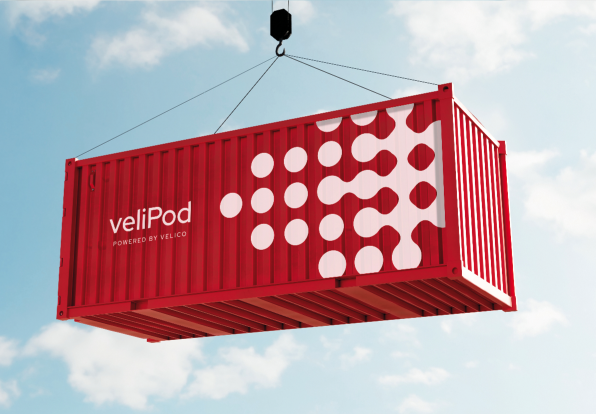
The first veliPod prototype, a device designed for fast and decentralised production of dried plasma, is currently being tested by the Armed Forces Blood Transfusion Centre (CTSA). This technology, more flexible than traditional freeze-dried plasma, could increase dried plasma availability for the management of patients at risk of hemorrhagic shock in operational settings and meet the demands of large-scale combat operation scenarios. After one year of evaluation, this use of spray-dried plasma technology could be expanded.
By Emmanuelle Ndoudi
On February 17, 2026, the Armed Forces Blood Transfusion Centre (CTSA) reached a significant milestone by receiving the first veliPod (developed by Velico Medical) at its facility in Clamart, France. This innovation, designed to ensure availability of vital blood and blood components, strengthens the CTSA’s ability to respond to operational challenges. Severe hemorrhage remains a major medical challenge in military medicine and is still the leading preventable cause of death in military operations. “The first half-hour is critical in operational conditions: a hemorrhaging casualty must be treated within the first few minutes,” confirms Chief Medical Officer Jean-Jacques Lataillade, Director of the CTSA.
Spray-drying Technology
Unlike traditional universal freeze-dried plasma (FLyp), produced by the CTSA using a freeze-drying process, spray drying with Velico’s VeliDryer produces dried plasma using a different process. “A different technology that we will evaluate over time,” adds the director. The spray-drying system necessitates the use of at least two containers. The first contains a clean air compressor used to dry plasma. The second houses two devices with distinct functions:
- One removes water from liquid plasma
- The other seals the dried plasma pouch
The plasma pouch is sealed, ready for use, and easy to store. This technological innovation aims to overcome the technical complexity associated with the traditional freeze-drying process.
Speed and Mobility
One of the advantages of spray-drying is its speed: producing one unit takes only 45 minutes, and rehydration requires only a few minutes before transfusion. The veliPod system is a decentralised solution for plasma production. Unlike immobile and centralised FLyp production, veliPod is a mobile container which requires water and electricity for operation. “veliPod enables production in a clean, mobile environment without the need for heavy infrastructure such as pharmaceutical sterile rooms,” explains Prof. Lataillade.
Large-Scale Production
By combining speed, mobility, and technological efficiency, VeliDryer and VeliSealer installed inside a veliPod enable large-scale production of plasma. “Within 48 hours, veliPod can produce 64 units of plasma,” states Prof. Lataillade. “This innovative blood component is complementary to our current therapeutic arsenal likely to be used in case of large-scale combat operations. It is not intended to replace the FLyp.”
Ongoing Developments
veliPod will undergo one year of evaluation to assess its operational performance. “We will also submit a dossier to the National Agency for the Safety of Medicines and Health Products. If the results are conclusive, we plan to acquire multiple units to scale up production,” notes Prof. Lataillade. Testing is already underway, and the official inauguration of the veliPod containers is expected in the coming months.
Related News

Sign up for Newsletter
Lorem ipsum dolor sit amet, onsectetur adipiscing elit nunc semper bibendum lorem ullamcorper mi lobortis